
Introduction
Danish home insurance premiums (indboforsikring) have climbed steadily over the past two years, and most households are still paying rates set when they first signed up — not the rates the market actually offers today. Tryg, Alka, Topdanmark, and other carriers adjust pricing regularly, but loyal customers rarely see those adjustments work in their favor.
This guide evaluates the leading home insurance options in Denmark for 2026 using data from Forsikring & Pension, consumer satisfaction surveys, and real premium benchmarks across the Danish market. The goal is straightforward: identify which insurers offer the best combination of coverage reliability, claims handling, and value — so you know whether your current policy is earning its cost or quietly overcharging you.
Key Takeaways
- Danish home insurance prices vary significantly across carriers—loyal customers often overpay by thousands of kroner annually
- The best policy depends on your household: coverage scope, deductible levels, and which carriers serve your situation matter more than brand name
- Evaluate Danish insurers using ankenævn complaint records, coverage breadth, and independent price comparisons across Tryg, Alka, Topdanmark, and others
- Auto-renewing without comparing is the most common way households leave money on the table each year
- Analyzing your current policy first reveals coverage gaps and duplicate coverage before you start comparing
What Is Homeowners Insurance and Why Does Your Choice of Insurer Matter in 2026?
Homeowners insurance protects your most valuable asset. A standard policy covers four core areas: your dwelling structure, personal property, liability claims, and temporary living expenses if disaster forces you out. It typically excludes floods, earthquakes, routine wear and tear, and some high-value items unless you add endorsements.
The 2026 market looks nothing like it did five years ago. The average annual premium nationally reached 17.430 DKK, driven by catastrophic weather events, construction cost inflation, and reinsurance markets that have tightened — some states saw reinsurance costs jump 70%. Major carriers have withdrawn from California, Florida, and other high-risk markets entirely.
That market pressure makes your choice of insurer more consequential than ever. Who you insure with determines not just what you pay today, but whether your carrier will remain solvent, pay claims fairly, and renew your coverage when disaster strikes. We evaluated the companies below on reliability and value, not premium alone.
Best Homeowners Insurance Companies of 2026
Selection is based on J.D. Power satisfaction scores, NAIC complaint ratios, AM Best financial strength ratings, coverage breadth, available discounts, and average premium data—companies are evaluated on a combination of value and reliability, not premium cost alone.
Amica — Best for Customer Satisfaction
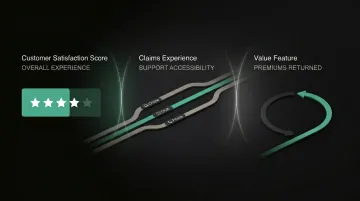
Amica secured the #1 position in J.D. Power's 2025 U.S. Home Insurance Study with a score of 705/1,000—the highest of any ranked insurer. The company has ranked at or near the top year after year, making it one of the most consistently rated insurers in the country.
Three features set Amica apart from most standard carriers:
- NAIC complaint ratio of 0.37 — well below the 1.0 industry baseline
- Platinum Choice HO-5 package extending dwelling coverage by 30% with worldwide replacement cost for personal property
- Dividend policies that return 5–20% of annual premiums to eligible policyholders
| Feature | Details |
|---|---|
| J.D. Power Overall Satisfaction Score | 705/1,000 (1st in 2025 U.S. Home Insurance Study) |
| Claims Filing Options | Online, live chat, or phone |
| Notable Coverage Feature | Dividend policies that may return 5–20% of annual premiums |
Amica's Platinum Choice package includes water backup/sump overflow coverage, special computer coverage, and up to 35.000 DKK in credit card fraud protection—features many competitors charge extra for.
Chubb — Best for High-Value Homes
Chubb ranked #1 in J.D. Power's 2025 Property Claims Satisfaction Study with a score of 773/1,000, the highest in the industry. This insurer specializes in high-net-worth homeowners and high-value properties, offering coverage features and liability limits (up to 700 millioner DKK) that standard policies don't include.
Chubb's Masterpiece policy includes extended replacement cost for dwellings and replacement cost for personal property as standard—not optional add-ons. The complimentary HomeScan service uses infrared camera technology to detect hidden moisture problems, missing insulation, and electrical hot spots before they become claims.
| Feature | Details |
|---|---|
| J.D. Power Claims Satisfaction Score | 773/1,000 (1st in 2025 Property Claims Satisfaction Study) |
| Best For | High-value homes; policies with premium features and high liability limits |
| Quote Method | Through an independent insurance agent (not available online) |
Chubb policies are arranged exclusively through independent agents, not online quote tools. That access point is intentional: the complexity and value of these policies call for hands-on guidance that a self-service portal can't provide.
State Farm — Best Large National Insurer
State Farm holds 18.2% market share, making it the largest homeowners insurer in the U.S. The company operates in nearly every state (excluding California, Massachusetts, and Rhode Island for new business) and maintains a vast network of local agents plus robust digital tools for self-service.
NerdWallet awards State Farm a 4.6/5.0 star rating, recognizing its accessibility, digital platform quality, and default policy features like extended dwelling coverage that restores homes to pre-loss condition using materials of similar quality.
| Feature | Details |
|---|---|
| NerdWallet Star Rating | 4.6/5.0 |
| Average Annual Premium (2,1 mio. DKK bolig, 7.000 DKK selvrisiko) | 15.463 DKK |
| Quote Method | Online or through a State Farm agent |
State Farm's app holds a 4.8/5.0 rating on the App Store, and its website allows full policy management without an agent call—useful for customers who want control without the wait.
USAA — Best for Military Families and Veterans
USAA scored 737/1,000 in the 2025 J.D. Power study—higher than the industry average—but isn't formally ranked due to eligibility restrictions. Membership is limited to active military, veterans, National Guard and Reservists, honorably discharged service members, and their families.
USAA standard policies include replacement cost coverage for personal property (many competitors offer actual cash value unless you pay for an upgrade) and identity theft protection up to 35.000 DKK in most states. The company waives deductibles for covered losses to military uniforms and equipment during active deployment—a unique benefit tailored to military life.
| Feature | Details |
|---|---|
| J.D. Power 2025 Overall Score (not ranked due to eligibility) | 737/1,000 |
| Who Can Apply | Active military, veterans, qualifying federal employees, and their families |
| Notable Perk | Replacement cost for belongings and identity theft coverage included as standard |
USAA's NAIC complaint index of 0.50 indicates significantly fewer complaints than expected for an insurer of its size.
Erie Insurance — Best Regional Balance of Value and Satisfaction
Erie Insurance ranked 3rd overall in J.D. Power's 2025 U.S. Home Insurance Study with a score of 676/1,000. Available in 12 states and Washington D.C., Erie consistently places in the top three for overall satisfaction and maintains one of the lowest NAIC complaint ratios in the industry (0.21 in 2023).
Erie's ErieSecure Home policy includes guaranteed replacement cost (GRC) coverage as standard, paying the full cost of rebuilding a house to its previous size and specifications even if it exceeds the policy limit—provided you report improvements over 35.000 DKK within 90 days.
| Feature | Details |
|---|---|
| J.D. Power Overall Satisfaction Score | 676/1,000 (3rd in 2025 U.S. Home Insurance Study) |
| Availability | 12 states: IL, IN, KY, MD, NY, NC, OH, PA, TN, VA, WV, WI, and Washington D.C. |
| Best For | Homeowners in available states seeking strong service and fair pricing |
Erie's average premiums run below the national median in most of its operating states, and its local agent network keeps the claims process personal rather than purely transactional.
How We Chose the Best Homeowners Insurance Companies
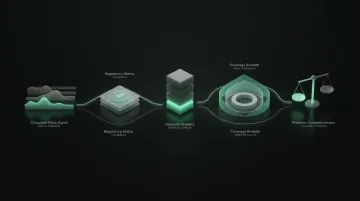
We evaluated carriers across five dimensions:
- Ankenævnet complaint ratio: Fewer complaints than the industry baseline signals reliable claims handling
- Finanstilsynet licensing status: Confirms the carrier operates under Danish regulatory oversight
- Financial stability: Sufficient reserve ratios to honor claims during high-loss periods
- Coverage breadth: Protections beyond standard indboforsikring terms, including extended liability and valuables coverage
- Premium competitiveness: Price measured against actual coverage offered across comparable Danish carriers
These criteria matter because the most common shopping mistakes have nothing to do with finding the lowest quote. Danish homeowners most often go wrong by:
- Choosing on premium alone without reviewing claims handling records
- Skipping the policy exclusions section — where the real coverage limits live
- Never cross-checking Ankenævnet complaint data across carriers
- Renewing automatically each year while the loyalty pricing gap quietly widens
Before requesting any new quotes, review your existing policy for coverage gaps, duplicate protections, and whether your current premium still reflects market rates. That analysis is what turns comparison shopping into a negotiation — not just a search for the cheapest option.
Conclusion
The right home insurance policy depends on your specific situation: what you own, where you live, and what gaps your current coverage leaves exposed. Whether you're weighing Tryg's broad network, Alka's competitive pricing, or Topdanmark's coverage options, the decision should come from comparing actual policy terms — not brand recognition alone.
Premium increases across the Danish market make active policy review more important than ever. Most households haven't compared rates in years — yet switching between quality carriers can produce real savings without reducing coverage. The gap between what you pay and what you should pay is often larger than expected.
That gap is exactly where the research pays off. Before requesting quotes, know what your current policy covers, what the market rate for that coverage actually is, and where your gaps are — so every conversation with an insurer starts from a position of clarity, not guesswork.
Frequently Asked Questions
What is the average cost of homeowners insurance?
The average annual premium is approximately 17.430 DKK nationally for a 2.800.000 DKK bolig with a 7.000 DKK selvrisiko. Costs vary significantly by state, home value, construction type, and coverage level. Comparing multiple quotes is the best way to find a fair rate for your specific situation.
What is high-value home insurance?
High-value home insurance is a specialized policy for homes valued above 5.250.000–7.000.000 DKK, offering higher coverage limits, guaranteed replacement cost, and extended liability protection that standard HO-3 policies don't include.
How much does high-value home insurance typically cost?
Premiums average 43.771 DKK annually for a 7 millioner DKK bolig with 2.100.000 DKK ansvarsdækning and a 17.500 DKK selvrisiko. Costs vary widely based on location, construction type, custom features, and specific coverage limits. High-value policies are priced individually based on property characteristics.
Which insurance companies insure high-value homes?
Chubb, Cincinnati Insurance, Andover Companies, and AIG specialize in high-value home insurance, offering the higher limits, premium materials coverage, and extended liability protection that standard insurers don't provide. Policies are typically arranged through independent agents rather than online quote tools.
What's the biggest mistake people make when filing a homeowners insurance claim?
The most common mistake is failing to document damage with photos and videos before cleanup begins — missing proof of loss leads directly to claim denials or reduced payouts. Most policies also require filing within 60 days of discovering damage, so don't delay.